

Cooking With Kids in the School Holidays: Easy Kitchen Jobs by Age
School holidays have a way of stretching the day out. By about 10am someone is bored, someone is hungry, and the kitchen is suddenly the most interesting room in the house. Rather than fighting it, why not put those little hands to work? Cooking with kids keeps them busy, teaches real skills and, with a bit of setup, doesn't have to end with flour on the ceiling.
This guide breaks down which kitchen jobs suit which ages, how to set up your space so it runs smoothly, and a handful of easy holiday recipes that work well with helpers.
Why cooking with kids is worth the mess
It's tempting to shoo kids out of the kitchen so dinner gets made faster. But a little time spent cooking together pays off in ways that go well beyond the meal.
- Fussy eaters get curious. Kids are far more likely to try a vegetable they chopped themselves.
- Maths and reading sneak in. Measuring, counting, halving a recipe and reading steps in order are all quiet little lessons.
- Confidence grows. Being trusted with a real job (and a real knife, when they're ready) means a lot to a kid.
- Life skills stick. A teenager who can cook a few meals is a teenager who can help out on a busy weeknight.
Set up the kitchen before you start
Most kitchen chaos with kids comes from scrambling for things mid-recipe. Ten minutes of prep makes the whole session calmer.
Give everyone their own station
A dedicated chopping board per child is one of the simplest things you can do. It marks out their space, stops elbows bumping and keeps raw and ready-to-eat food apart. A bamboo chopping board set in three sizes works well here: the smallest board suits little ones, the medium board suits older kids, and the large one stays with the adult doing the heavier prep. Pop a damp tea towel underneath each board so it doesn't slide.

Bring everything down to their level
Set out every ingredient and tool before you start, the way a cooking show does. Measuring cups, bowls, spoons and ingredients all within easy reach means fewer kids climbing on benches and fewer open cupboards. A sturdy step stool or learning tower is worth having if your bench is high.
Keep sharp things out of reach
Knives should live somewhere you control, not loose in a drawer small hands can open. A magnetic knife holder pushed to the back corner of the bench keeps blades visible, tidy and away from the edge. You hand out the right knife for the job, and it goes straight back when they're done. We cover more options in our guide to storing knives without a bulky block.
Set a few ground rules
- Wash hands before starting and after touching raw meat or eggs.
- Only an adult opens the oven or moves hot pans.
- Knives stay on the board, never waved around.
- Clean as you go (yes, kids too).
Kitchen jobs for kids, by age
Every child is different, so use these as a starting point rather than a rulebook. You know best what your kids can handle.
Ages 2 to 4: the helpers
Toddlers and preschoolers love anything that involves their hands. Keep jobs short and let them get a bit messy.
- Washing fruit and veg in a bowl of water
- Tearing lettuce and herbs
- Stirring cold mixtures
- Tipping pre-measured ingredients into a bowl
- Mashing banana or avocado with a fork
- Sprinkling toppings on pizza or muffins
Ages 5 to 7: the apprentices
This age group is ready for a bit more responsibility and usually loves being given a "proper" job.
- Cutting soft foods (banana, strawberries, cooked potato) with a butter knife or kid-safe knife
- Cracking eggs into a separate bowl first, so shell is easy to fish out
- Measuring dry ingredients with cups and spoons
- Spreading, rolling and shaping dough
- Threading fruit or veg onto skewers (blunt ends only)
- Setting the table and helping pack leftovers away
Ages 8 to 11: the sous chefs
Older primary kids can take on real prep with supervision close by.
- Using a small, sharp knife with the "claw" grip to protect fingertips
- Grating cheese and carrot (watch those knuckles)
- Reading and following a simple recipe from start to finish
- Using the microwave and toaster
- Stirring on the stovetop with an adult right beside them
- Portioning snacks and lunches into bags or containers
Ages 12 and up: the head chefs
Early teens can often cook a full meal with an adult nearby for questions. Let them plan a dinner, write the shopping list and run the kitchen for the night. It's a great confidence builder, and a nice night off for you.
Easy school holiday recipes to cook together
The best kid-friendly recipes have lots of small, hands-on steps and a quick payoff. A few that work well:
- Homemade pizzas. Store-bought bases or pita bread, a smear of sauce, and a topping bar. Everyone builds their own.
- Rainbow fruit skewers. Great for younger kids to practise soft cutting and threading.
- Banana and oat muffins. Mashing, measuring and stirring, with muffins at the end.
- Rice paper rolls. Lots of chopping for older kids and rolling for everyone. Perfect for a warm spring day.
- San choy bow. Kids wash and separate lettuce cups while an adult browns the mince.
- Snack packs for the week. Portion crackers, cut veg and fruit into bags ready to grab.
Turn holiday cooking into next term's head start
Here's a little trick: use the holidays to practise the jobs that make school mornings easier. If your kids learn to portion snacks and pack part of their own lunch now, you'll thank yourself in term four.
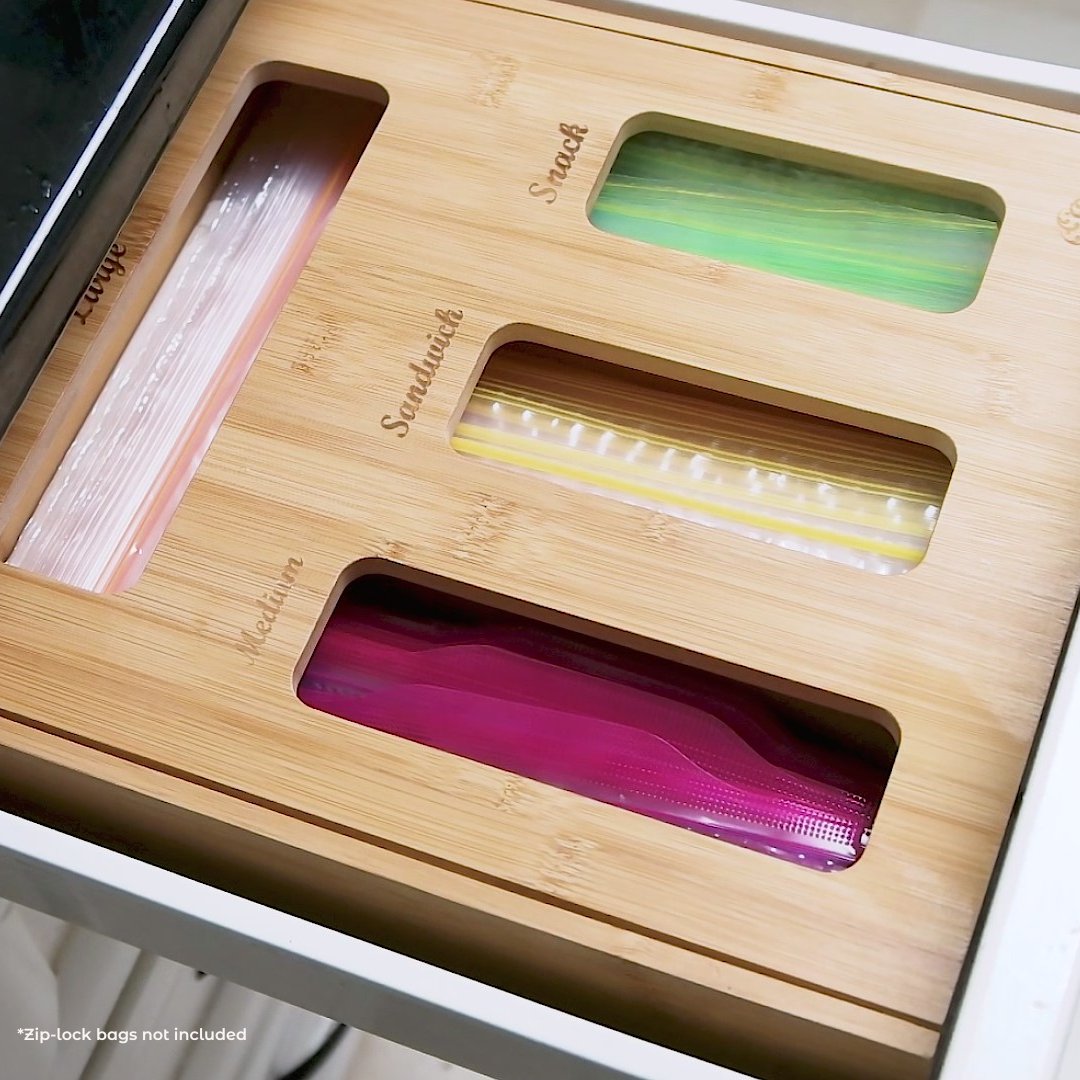
Make it simple by giving each size of bag a home. A 4-in-1 bamboo bag organiser in a low drawer means kids can find snack, sandwich and larger bags without asking. Our school lunchbox prep guide has more ideas for getting the whole family into a rhythm.

If you're trying to cut down on single-use plastic too, washable silicone bags and beeswax wraps are easy for kids to use once they know where everything lives.
Cleaning up (the part nobody wants to do)
Cleaning up is part of cooking, and kids can do more of it than we often expect. A few habits help.
- Have a scrap bowl on the bench. Peels and offcuts go straight in, ready for the compost or bin.
- Give each child one clean-up job. Wiping benches, drying utensils or putting ingredients back.
- Wash boards straight away. Warm soapy water, a quick scrub and stand them upright to dry. Never leave bamboo boards soaking in the sink.
If raw meat was on the menu, give boards an extra bit of care. Our guide to keeping chopping boards hygienic explains how to avoid cross-contamination without harsh chemicals.

Keep it fun, not perfect
The muffins might be lopsided and the pizza might have far too much cheese. That's fine. The goal of cooking with kids isn't a picture-perfect result, it's time together and a few new skills along the way. Start small, pick one or two recipes for the holidays, and let them take the lead a little more each time.
If you'd like to make the kitchen easier for everyone, the Lunch Prep Bundle brings a bamboo board, wrap dispenser and bag organiser together in one go. And for more ideas on building a kitchen that's kinder to the planet, start with our plastic-free kitchen guide.