

How to Care for Bamboo Kitchenware So It Lasts for Years
Bamboo is one of the most forgiving materials you can keep in a kitchen, right up until the moment you leave it soaking in the sink overnight. Treat it with a little respect and a bamboo board or organiser will look good for years. Ignore it and you can warp or crack a brand new one in a week.
The good news is that caring for bamboo is genuinely easy once you know the handful of rules. Here they are.
First, why bamboo is worth the small effort
Bamboo is technically a grass, not a timber, and it grows back fast without replanting, which is what makes it such a renewable choice. It is also denser and harder than a lot of hardwoods, so it resists knife scarring and moisture better than soft timber boards. That hardness is exactly why it lasts, and why it earns a place over plastic on both looks and longevity.
But bamboo is still a natural fibre. It drinks up water if you let it, and that is the one thing that does it real harm.
The golden rule: never let it soak
If you remember nothing else, remember this. Do not leave bamboo sitting in water, and do not put it through the dishwasher. The heat and the long soak swell the fibres, then dry them unevenly, and that is what causes warping, splitting and that grey, raised, fuzzy surface.
Wash bamboo by hand with warm water and a little dish soap, give it a quick scrub, rinse, and move straight to drying. The whole thing takes under a minute.

How to wash and dry it properly
- Hand wash only, warm soapy water, soft sponge or brush. Skip the dishwasher every time.
- Dry it standing up, not flat. Lying flat traps moisture underneath and dries one side faster than the other, which is what pulls a board into a curve. A board that dries upright on a set with a stand stays flat because air reaches both faces evenly.
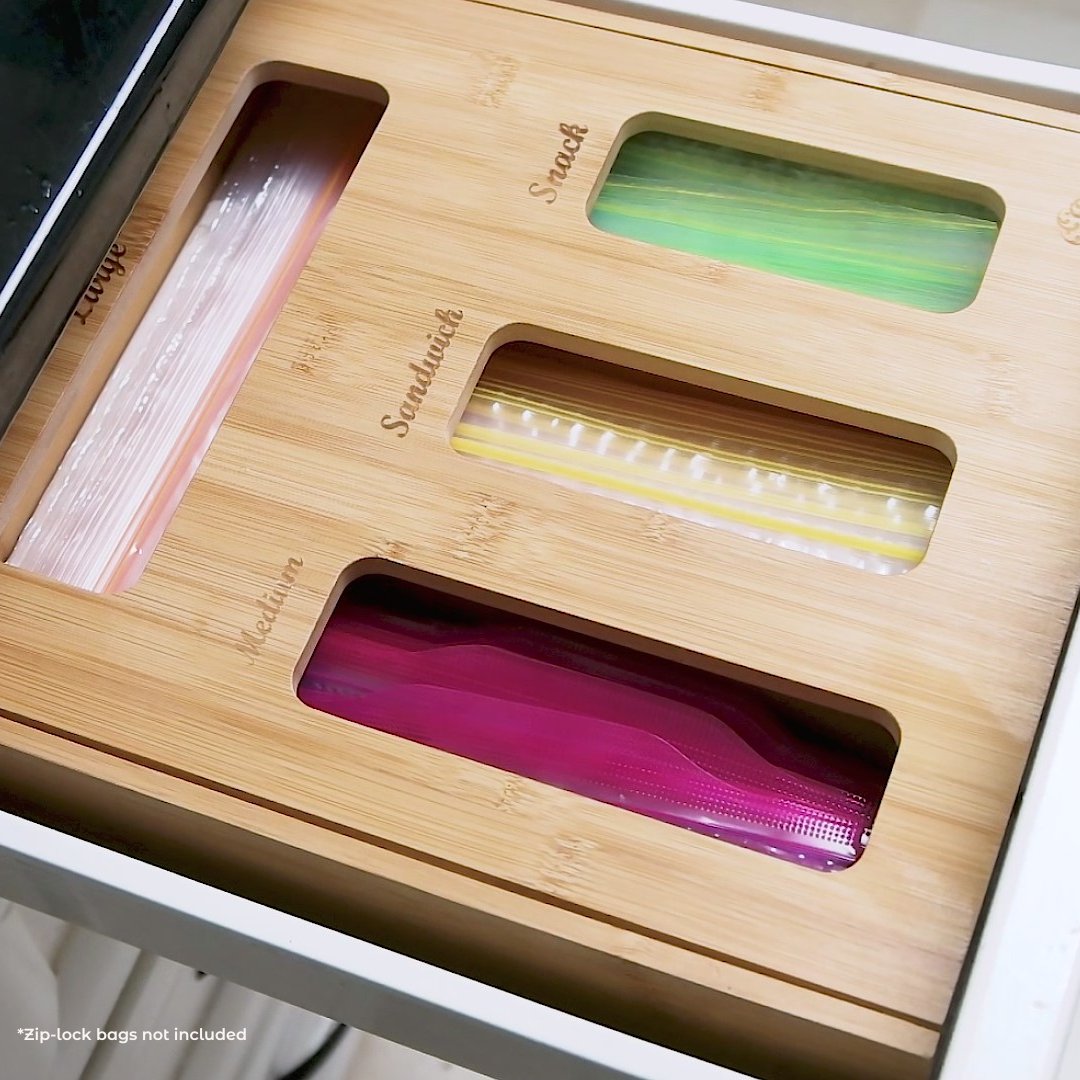
- Wipe up spills on organisers rather than rinsing them under the tap. For something like a bag organiser or a wrap dispenser, a damp cloth is all it needs.
Oil it now and then
Every few weeks, or whenever the surface starts looking dry and pale, give your boards a wipe of food-safe oil. Food-grade mineral oil is the standard choice because it doesn't go rancid the way cooking oils can. Beeswax-based board conditioners work beautifully too.

Apply a thin coat with a clean cloth, let it soak in for a few hours or overnight, then buff off the excess. Oiling tops up the natural barrier, keeps the colour rich, and stops the surface drying out and cracking. It is the single best habit for making bamboo last.
Dealing with smells and stains
Cut a lot of onion, garlic or fish on a board and it can hold the smell. A scrub with coarse salt and half a lemon lifts most of it and freshens the surface at the same time. For stubborn stains, a paste of bicarb soda and a little water works well. Rinse lightly, dry upright, and oil afterward since both salt and bicarb are mildly drying.
Avoid bleach and harsh chemical cleaners. They strip the oil, dry the fibres and can leave a taste you really don't want near food.
A quick care routine to remember
Hand wash, dry standing up, oil every few weeks, and never let it soak. That is the entire job. Stick to it and your bamboo boards, organisers and dispensers will look almost new years from now, which is rather the point of choosing something built to last instead of replaced.
If you are still building out your kitchen, our plastic-free kitchen guide covers which swaps to make first, and most of them happen to be bamboo for exactly the reasons above.