

How to Store Leftovers Without Plastic
Most of us reach for the cling film without thinking. There is half a pot of bolognese on the stove, a bowl of cut fruit on the bench, and a quick stretch of plastic feels like the fastest way to deal with it. The trouble is that single-use plastic wrap is hard to recycle, tears at the worst moment, and quietly adds up to a lot of waste over a year of dinners.
The good news is that storing leftovers without plastic is not about giving anything up. With a few reusable swaps and a tidier system, you can keep food fresher for longer and make your fridge far easier to live with. Here is how to do it properly.
Why move away from plastic wrap for leftovers
Cling film has three problems when it comes to leftovers. It is almost always destined for landfill because soft plastics are difficult to recycle through kerbside bins. It does not seal as well as people assume, so food dries out or picks up fridge smells. And it encourages a one-and-done habit, where you use a fresh sheet every single time.
Swapping to reusable storage is better for the planet and usually better for your food. Airtight containers and proper reusable bags hold moisture where you want it, keep odours out, and let you actually see what is in the fridge so nothing gets forgotten at the back.
If you want the bigger picture on cutting plastic across your whole kitchen, our plastic-free kitchen guide for Australia is the best place to start.
Build a simple plastic-free leftovers kit
You do not need a cupboard full of gadgets. A small, well-chosen set of reusables will cover almost every leftover situation.
Glass containers with lids
Glass is the workhorse of plastic-free storage. It does not stain, it does not hold onto curry smells, and it goes straight from fridge to oven or microwave. Choose a few sizes so you can match the container to the amount of food, which keeps air out and slows spoilage. Square and rectangular shapes stack better than round ones and waste less shelf space.
Reusable silicone or fabric bags
Reusable bags are perfect for the things that do not suit a rigid container, like a couple of leftover sausages, a handful of fresh herbs, or sliced veg for tomorrow's lunch. They flatten down, freeze well, and wash out for the next use. The catch is that loose bags turn into a tangled mess in the drawer, which is exactly where a proper organiser earns its keep.

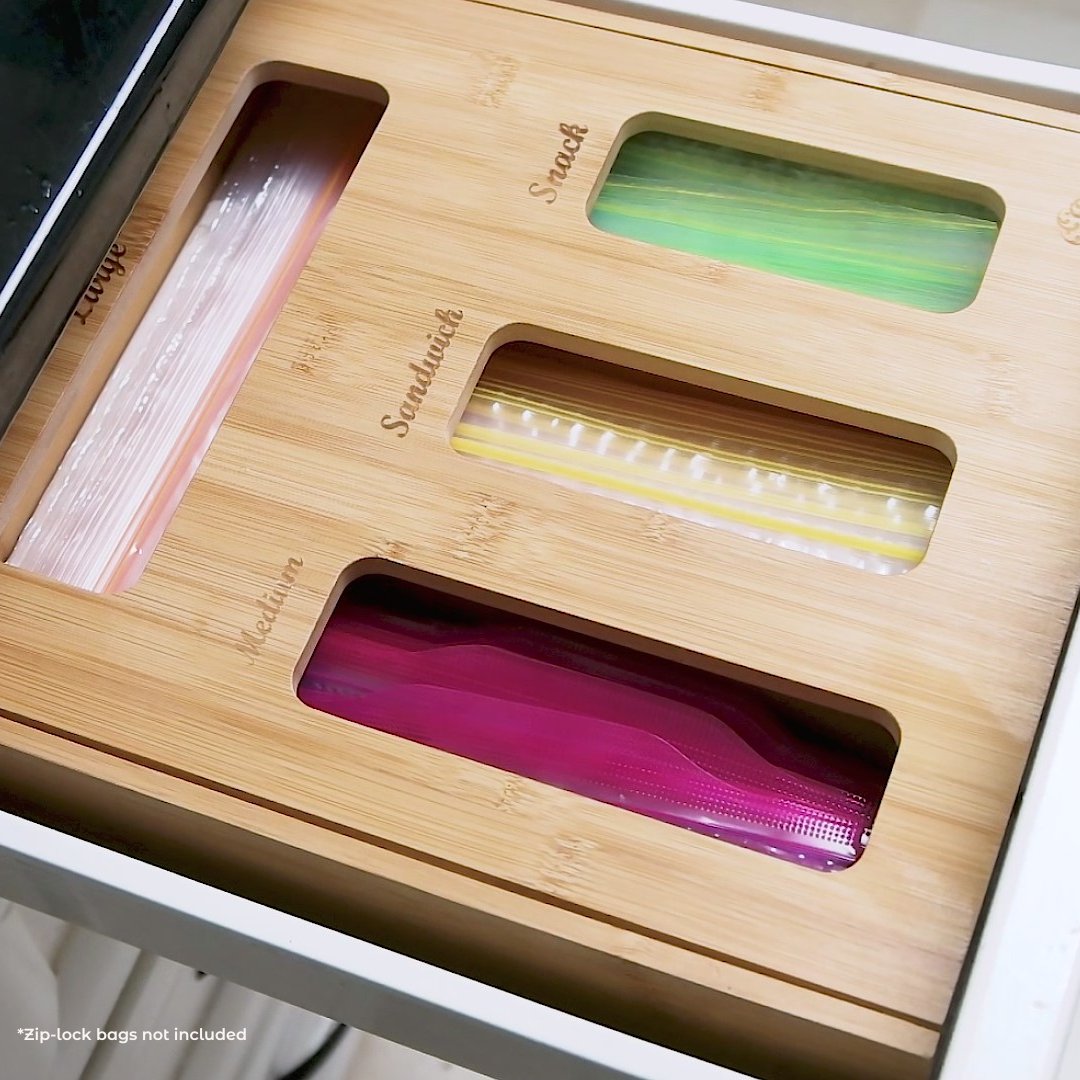
Our 4-in-1 bamboo bag organiser sorts snack, sandwich, medium and large bags into their own slots with a sliding lid, so you can pull one out with a single hand while the others stay put. It sits flat in a drawer or mounts on a wall if your bench space is tight. For more on taming bags specifically, we have a full post on how to organise zip-lock and sandwich bags.
Match the storage to the leftover
Different foods keep best in different ways. A quick mental sorting step saves you from soggy disappointment the next day.
Cooked meals and saucy dishes
Curries, pasta, stews and rice belong in airtight glass or stainless containers. Cool them on the bench for no more than two hours, then refrigerate. Most cooked dishes are happy for two to three days in the fridge, and many freeze beautifully in portion-sized containers for a future busy night.
Cut fruit and vegetables
Half an avocado, a wedge of pumpkin or a cut lemon does not need plastic at all. A small airtight container or a reusable bag keeps them fresh, and a squeeze of citrus over cut avocado slows the browning. Leafy herbs last longest stood upright in a little water, loosely covered.
Cheese, bread and baked goods
Cheese prefers to breathe a little, so wrap it in baking paper rather than sealing it tight, then pop it in a container. Bread is best in a bread box or a reusable bag at room temperature, since the fridge actually dries it out faster.

When you do reach for wrap, foil or baking paper, having all three in one tidy spot makes the job quicker and cuts down on waste from messy tearing. Our 3-in-1 bamboo dispenser with cutter holds all three rolls and gives you a clean, straight cut every time. We cover the why and how in our guide to storing cling wrap, foil and baking paper.
Label, date and keep it visible
The biggest cause of wasted leftovers is forgetting they exist. A leftover hidden behind the milk for a week becomes the bin's problem, which defeats the whole point of saving it.
Keep a small section of the fridge as your leftovers shelf so everything cooked lives in one place. Clear containers help you see what is there at a glance. A reusable label or a strip of masking tape with the date written on it takes five seconds and tells you instantly whether something is still good. A simple rule of thumb is to use cooked leftovers within three days, or freeze them on day one if you know you will not get to them.
Freezer storage without the plastic
The freezer is where plastic-free habits really pay off, because food sits there for weeks. Portion meals into glass or stainless containers, leaving a little gap at the top for liquids to expand. For flatter items like soups or sauces, a reusable silicone bag laid flat freezes quickly and stacks like a book once solid. Label everything, because a frozen pasta sauce and a frozen stock look surprisingly similar at the back of the freezer in July.
A tidy drawer makes the habit stick

Good intentions fade fast when the cupboard is chaos. If your reusable bags are tangled and your containers are missing their lids, the cling film wins by default. Giving your storage a proper home is what turns a one-off effort into an everyday habit.
If you want to set the whole system up at once, our Kitchen Organising Bundle pairs the 4-in-1 bag organiser with the 3-in-1 wrap dispenser, so your reusable bags and your wrap, foil and baking paper all have a tidy, grab-and-go spot. Both pieces are made from sustainable bamboo, so the storage matches the plastic-free goal.
Small swaps, real difference
Storing leftovers without plastic comes down to three things: a few good reusable containers and bags, a quick habit of labelling and dating, and a tidy place to keep it all. Do that, and you will waste less food, save money on cling film you no longer buy, and keep a meaningful amount of plastic out of landfill over the year. It is one of the easiest sustainable swaps to make, and your future self, staring into a tidy fridge on a busy weeknight, will thank you for it.