

Eco-Friendly Kitchen Swaps Under $50 (That You'll Actually Stick With)
There's a version of the sustainable kitchen that looks beautiful on Instagram and costs about as much as a weekend away. Matching glass canisters, an imported compost system, gadgets you use twice and then hide. This is not that guide.
Most of the swaps that genuinely cut waste in an Australian kitchen are cheap. Several cost less than a takeaway dinner, and everything in the list below comes in under $50. The hard part is not buying them. It's still using them in six months, once the novelty has worn off and cling wrap is on special again. So this guide covers both halves: what's worth buying, and the one habit that makes it stick.
A quick rule before you spend a dollar
A swap only counts if the reusable version properly replaces the disposable one. If it's fiddly, hard to clean or impossible to find when you need it, you'll quietly drift back, and now you own both. Before buying anything, ask two questions. Would I still use this on a tired Tuesday night? And does it have an obvious home in my kitchen? Keep those in mind as you work through the list.
The swaps, from cheapest up
Jars you already own: free
Start here, because the best price is zero. Pasta sauce jars, jam jars and coffee tins handle dry goods, leftover soup, salad dressings and half an onion perfectly well. If you're freezing in glass, leave a couple of centimetres of headroom so the contents can expand without cracking the jar. We've gone deeper on this in our guide to storing leftovers without plastic, including which containers suit which jobs.
A wooden dish brush and compostable cloths: $10 to $25
Plastic sponges shed microplastics into your sink water and fall apart within weeks. A timber dish brush with a replaceable head lasts far longer, and cellulose cloths can go in the compost once they're worn out. This is the easiest first swap on the list: cheap, no learning curve, and you'll never miss the old sponge.
Reusable produce and bread bags: $10 to $20
Mesh bags for fruit and veg, and a cloth bag for the bakery run. The swap itself is simple. The failure point is location: if they live in a kitchen drawer, they will never be with you at the shops. Keep them inside your shopping bags, and put those back near the door (or straight into the car boot) as soon as you've unpacked.
Beeswax wraps: $15 to $35
These replace cling wrap for covering bowls, wrapping cheese and keeping half a lemon respectable. The warmth of your hands softens the wax so the wrap moulds around whatever you're covering. Wash them in cool water with a little detergent, keep them away from heat, and a good set lasts about a year before it can go in the compost.
An honest caveat: they're not suited to raw meat or fish. Use a lidded container for those, and don't feel guilty about keeping foil and baking paper for the oven. A lower-waste kitchen is a direction, not a purity test.
Silicone food bags: $25 to $45
A starter set of silicone ziplock bags covers marinades, freezer batches, school snacks and soup. They go in the dishwasher and the freezer, and the good ones outlast hundreds of disposable bags. Two tips from experience: buy fewer, larger bags than you think you need, and stand them upside down over a bottle or jar to dry properly, because the corners hold water.
The step everyone skips: give your reusables a home

Here's the pattern that kills most swaps. You buy the reusable bags, use them happily for a fortnight, then one day they're all drying on the rack and someone shoves them into a random drawer. Three weeks later you're back on single-use, not because you changed your mind, but because the reusables vanished.
Organisation is not the glamorous part of a low-waste kitchen, but it's the difference between a swap and a purchase. Once every reusable has an obvious spot, using it becomes the path of least resistance.
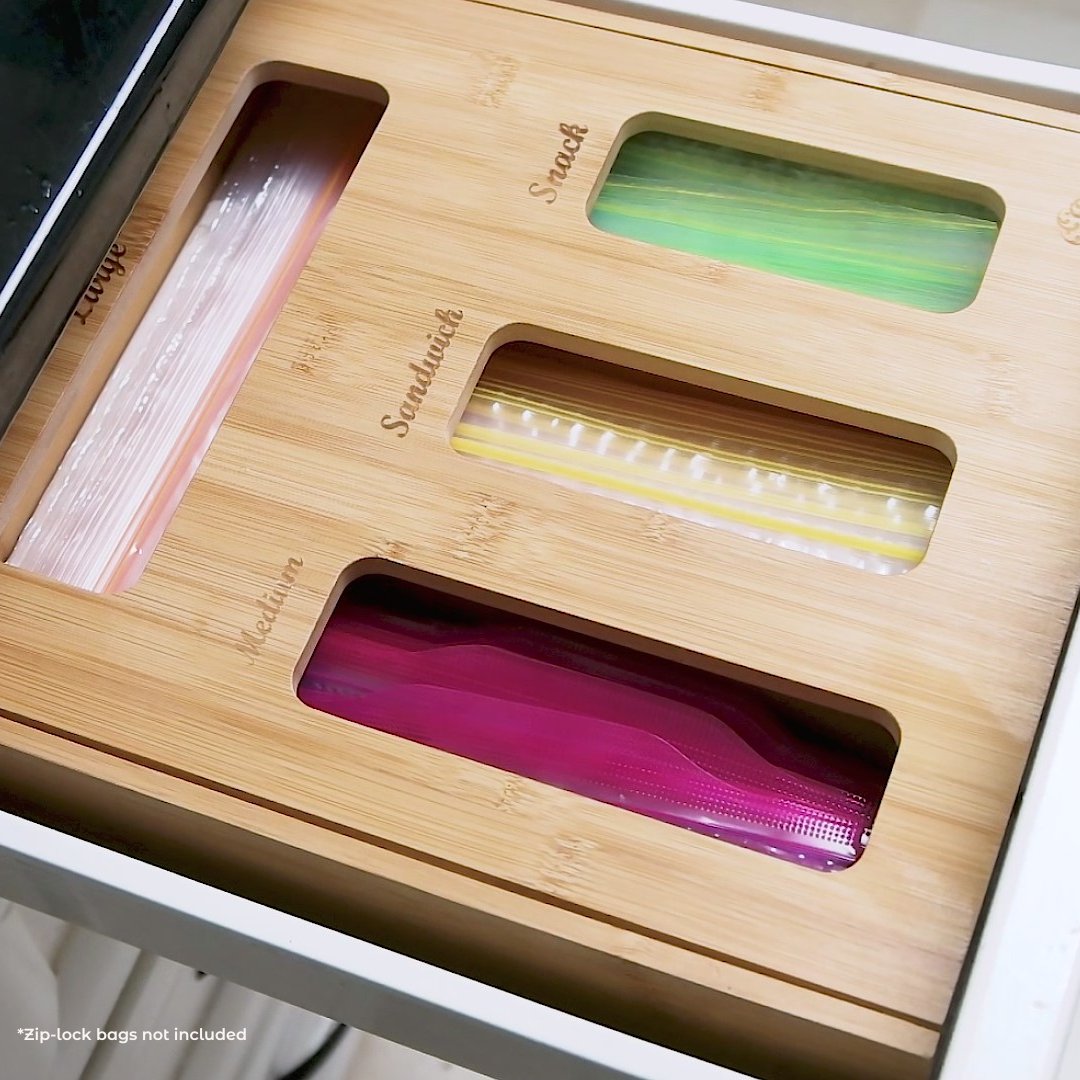
This is where we'll be upfront: our organisers sit a little past the $50 mark, and they earn it. The 4-in-1 bamboo ziplock bag organiser ($64.99) gives snack, sandwich, medium and large bags their own labelled slots, so the disposable bags you're running down and the reusables replacing them are both visible and easy to grab. The 5-piece detachable set ($59.99) does the same job with boxes you can split between a drawer and the pantry.

Short on drawer space? The 4-in-1 mounts on a wall or cupboard door, which suits small kitchens where every centimetre of bench matters.
The same logic applies to the rolls you're phasing out. Most kitchens keep foil and baking paper for oven work long after the cling wrap habit fades, and the bamboo 3-in-1 dispenser ($62.99) keeps all three rolls in one tidy spot with a slide cutter. You'll use what you have deliberately instead of discovering three half-finished rolls of foil jammed behind the toaster.
Gifting a greener kitchen: the $50 shortcut
Kitchen swaps make satisfying gifts, but guessing someone else's drawer sizes and colour preferences is a gamble. A STYLIQUE gift card starts at exactly $50 and lets them choose their own starting point. If you'd rather hand over an actual parcel, our sustainable kitchen gift guide rounds up options people genuinely use.

Start with one drawer, not the whole kitchen
You don't need to overhaul everything by Sunday. Pick one swap, use it until it's boring, then pick the next. A dish brush this fortnight, beeswax wraps the next, a proper home for your bags after that. With almost every step under $50, the budget takes care of itself, and by Christmas your kitchen quietly runs on less waste without a single dramatic declutter.
If you want the bigger picture, our practical guide to a plastic-free kitchen covers the whole journey room by room, at whatever pace suits your household.