

Summer Picnic and Beach-Day Food Packing Without the Single-Use Plastic
An Australian summer picnic has a lot going for it: long light evenings, a patch of grass or sand, and food that tastes better outdoors. What it does not have going for it is the packing. Somewhere between the kitchen and the beach, most of us end up with a tangle of cling wrap, a crushed sandwich and a bag of rubbish at the end of the day.
It does not have to go that way. A little prep on the bench, a few smart storage habits and the right tools make picnic food easier to carry, safer in the heat and far less wasteful. Here is the approach we use.
Start with a menu that travels well
The best picnic food holds its shape, tastes fine at outdoor temperature and does not need a lot of assembly on a rug. Think wraps and rolls rather than tall sandwiches, pasta or grain salads, cut fruit, cheese and crackers, boiled eggs, and sturdy vegetables with a dip.
Leave the delicate things (soft herbs, avocado, leafy salad) in a separate container and dress them on site. It takes two minutes and saves a soggy lunch.
Keep hot-weather food safety in mind
Anything containing meat, dairy, eggs or cooked rice needs to stay cold. Pack it straight from the fridge, keep it in an insulated bag with ice bricks, and put it at the bottom of the bag where it stays coolest. As a general rule, food should not sit in the warmth for more than a couple of hours, and less on a really hot day. If in doubt, leave it out.
Prep the night before
Picnic mornings go better when the work is already done. The evening before, do the washing, chopping and cooking, then store everything cold overnight.
A good chopping surface makes this quick. We like having a few boards on hand so that the fruit and vegetables are not sharing a surface with raw meat or onion. If you want a refresher on keeping boards clean, our guide to chopping board hygiene covers the basics.

The Bamboo Chopping Board Set gives you three sizes, so you can prep fruit on one, bread and cheese on another and keep a third for anything raw. Each board has a juice groove, which helps when you are slicing watermelon or cooked meat.
Swap cling wrap for better habits
Cling wrap is the default for picnics because it is quick, but it is also the thing most likely to blow across the beach. You have plenty of alternatives:
- Reusable containers with tight lids for salads, cut fruit and anything saucy.
- Beeswax wraps or cloth covers for halved fruit, cheese and bread.
- Wide-mouth jars for dips, overnight oats or layered salads.
- Reusable silicone or fabric bags for snacks, nuts and crackers.
If you do still use foil or baking paper, a dispenser with a built-in cutter makes it easier to use only what you need. Our Bamboo 3 in 1 Cling Wrap, Baking Paper and Foil Dispenser holds all three rolls in one tidy spot, which means the wrap is easy to reach on a busy morning and you are less tempted to tear off far too much.

Pack snacks in portions, not packets
Snacks are where single-use plastic piles up fastest. Instead of a handful of small packets, portion things into reusable bags the night before: nuts, crackers, sliced capsicum, grapes, dried fruit. Kids can grab their own, and nothing gets left behind in the sand.
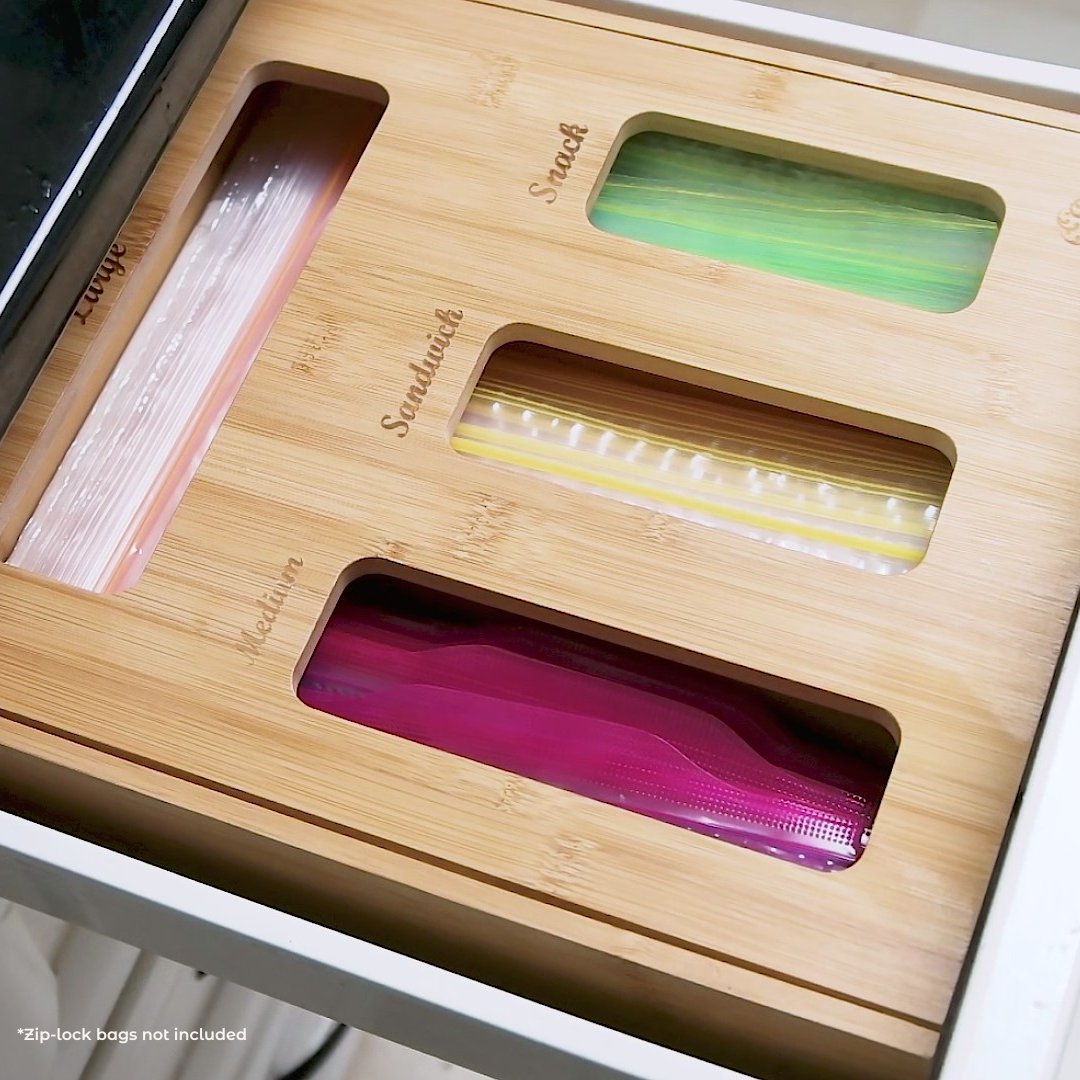
This is where a tidy bag system earns its place. If your reusable and zip-lock bags are currently jammed in a drawer, the 4-in-1 Bamboo Ziplock Bag Organiser sorts them into four size slots (snack, sandwich, medium and large), so you can grab the right bag in seconds. We cover more ideas in our guide to organising zip-lock and sandwich bags.

Build a packing system
Once you have a routine, picnics stop feeling like a project. Here is a simple order of operations:
- Chill everything first. Cold food goes in cold, and a cold bag stays cold for longer.
- Pack in layers. Heavy and cold items at the bottom, bread and delicate food on top.
- Bring a reusable bag for the return trip. Dirty containers, wet cloths and any leftovers go in there, not in a loose plastic bag.
- Take a small cloth or two. They replace paper towels and double as a plate or napkin.
- Pack out what you pack in. Leave the spot as you found it.
Plan for the leftovers
If food has been out in the heat for a few hours, the safest choice is usually to bin it. Anything that stayed in the cold bag the whole time can come home and go straight into the fridge. Our guide to storing leftovers without plastic has some easy ways to do that.
If your picnic turns into a full barbecue, our barbecue prep guide picks up where this one leaves off.
A packing kit that stays ready
The easiest way to make this a habit is to keep the key items together so you are not hunting for them every time. If you are starting from scratch, the Lunch Prep Bundle brings a board, a wrap dispenser and a bag organiser into one set, which suits picnic packing as well as school lunches (see our lunchbox prep ideas).
The short version
Choose food that travels well, prep the night before, keep cold things cold, swap cling wrap for reusable options and pack out everything you bring. None of it is complicated, and it adds up to a picnic that is easier to carry and a lot kinder to the beach.
For the bigger picture, our plastic-free kitchen guide is a good place to start.